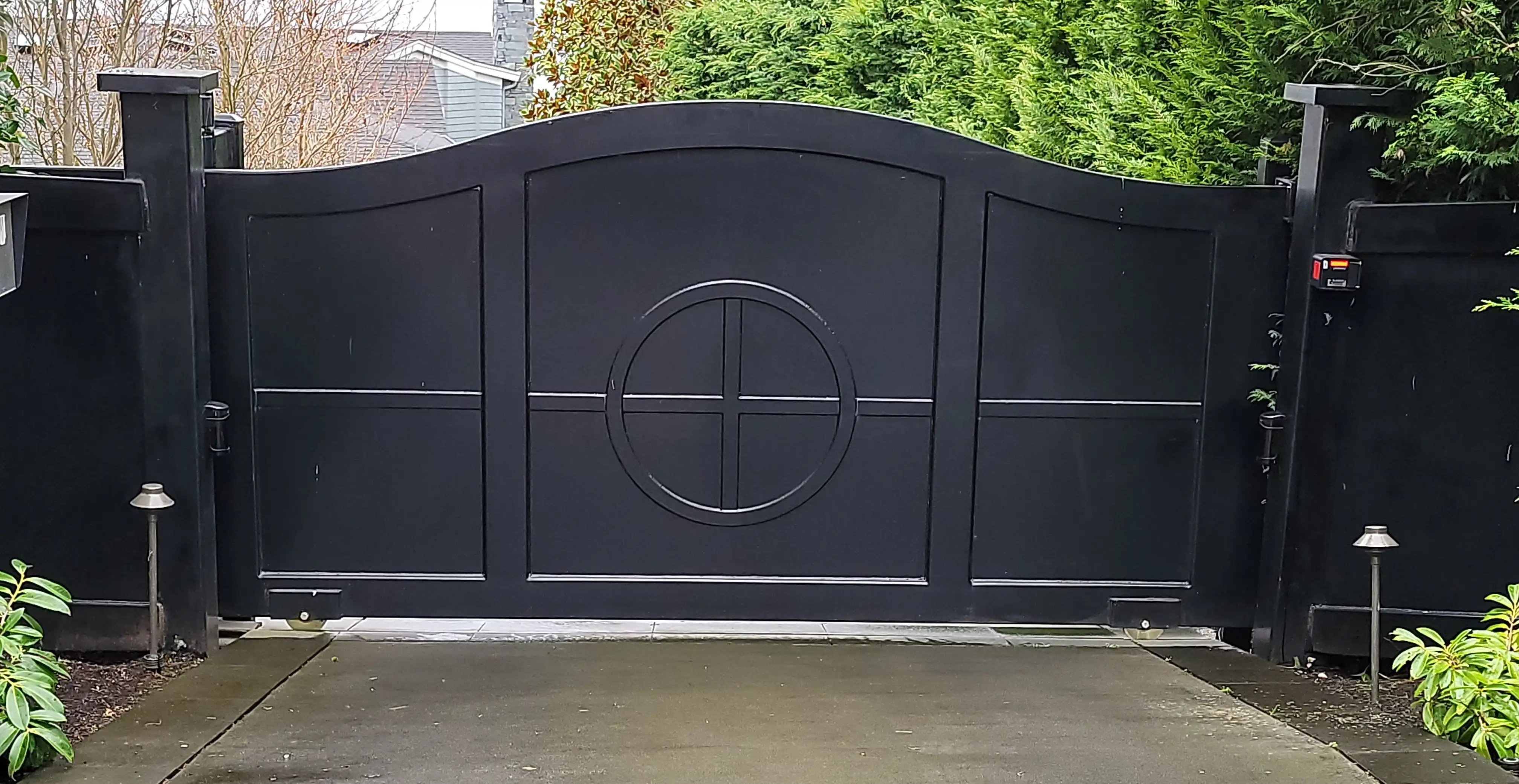
Automation
Gate automation, access control, and electrical systems for secure, convenient entry management.
Gate automation transforms a manual gate into a controlled entry point. We design, install, and service automated gate systems that meet UL 325 and ASTM F2200 safety standards while providing reliable, long-term operation.
What We Do
- Gate operator selection and installation
- Access control system integration
- Vehicle detection loops and sensors
- Safety devices (photo eyes, edges, reversing mechanisms)
- Fire department access (Knox boxes, Opticom)
- Electrical infrastructure and power connections
- Preventative maintenance programs
Best Fit For
- Commercial properties with controlled entry
- Industrial facilities requiring vehicle access management
- Gated communities and HOAs
- Parking facilities and garages
- High-security sites
- Properties retrofitting automation to existing gates
How We Deliver
- Site assessment and operator sizing
- Access control system design
- Electrical planning and permitting
- Professional installation to code
- Safety device installation and testing
- Commissioning and user training
- Ongoing maintenance and service
Standards & Compliance
- UL 325 for gate operator safety
- ASTM F2200 for vehicular gate systems
- NEC (National Electrical Code)
- Local electrical permitting requirements
Why Automate a Gate
Manual gates work. Someone gets out of their vehicle, opens the gate, drives through, gets out again, closes the gate. It takes time. It is inconvenient in rain. It creates security vulnerabilities while the gate stands open. For many properties, that inconvenience is acceptable. For others, automation solves real problems.
Automation provides convenience, gates open for authorized users without leaving the vehicle. It provides security, gates close automatically, limiting the window of vulnerability. It provides control, access logs record who entered when. It provides flexibility, different credentials grant different access at different times.
But automation adds complexity. Operators require power. Control systems require programming. Safety devices require installation and testing. Maintenance requirements increase. The question is whether the benefits justify the investment and ongoing commitment. For most commercial and many residential applications, they do.
Safety as the Foundation
Automated gates can injure or kill. A closing gate striking a person, a vehicle caught between gate leaves, a child running through an opening, these scenarios cause serious harm. UL 325 exists because people have died at automated gates.
We approach every automation project with safety as the foundation, not an afterthought. Operator selection, safety device placement, control logic, and installation details all affect whether a gate operates safely. Cutting corners on safety to save money or simplify installation is not acceptable.
Compliance with UL 325 is not optional. It is required by code, expected by insurers, and essential for liability protection. More importantly, it protects people. We install systems that meet current 8th Edition requirements, regardless of what might have been acceptable years ago.
The Complete System
A gate operator alone does not make an automated gate system. The complete system includes the operator, safety devices, access control, vehicle detection, fire department access, and electrical infrastructure. These components must work together correctly.
Integration matters. Photo eyes must communicate with operators to stop or reverse gate travel. Access control systems must trigger gate operation while respecting safety interlocks. Vehicle detection must prevent gates from closing on vehicles. Fire department systems must override normal operation in emergencies.
We design and install complete systems, not just operators bolted to gates. Every component is selected, placed, and programmed to work within the whole. The result is a system that operates reliably, safely, and as intended.
- Gate operators sized for weight and duty cycle
- Safety devices meeting UL 325 requirements
- Access control for authorized entry
- Vehicle detection for exit and safety
- Fire department access systems
- Electrical infrastructure to code
Operator Selection
Operators are not interchangeable. Swing gates need swing operators, articulating arm, linear, or underground types depending on gate configuration and mounting conditions. Slide gates need slide operators matched to gate weight and speed requirements. Barrier arms need barrier operators. Selection affects performance, longevity, and maintenance requirements.
Duty cycle matters as much as capacity. An operator rated for a 500-pound gate might handle that weight, but if it cycles 200 times per day, it will fail prematurely. Commercial and high-traffic residential applications need operators rated for actual usage, not just gate weight.
We select operators from established manufacturers with proven track records and available parts. Obscure brands may cost less initially but create problems when parts are needed. We standardize on equipment we know and can service.
Access Control Integration
How does the gate know to open? Access control answers that question. Keypads, card readers, telephone entry systems, remote controls, and smartphone apps all provide credentials that authorize gate operation. The right system depends on who needs access, how often, and what level of control and logging is required.
Simple residential systems might use remotes and keypads. Commercial systems often integrate with building access control, the same card that opens the front door opens the gate. High-security systems layer multiple credentials and maintain detailed access logs.
We design access control to match actual needs, not theoretical requirements. Overbuilt systems frustrate users. Underbuilt systems fail to provide needed security or convenience. Understanding how the property operates guides proper system design.
Electrical Requirements
Gate operators need power. Residential operators typically run on 120V. Commercial operators may require 240V single-phase or three-phase power. Solar systems can work in some applications. Understanding power requirements early prevents problems later.
Electrical work for gate automation requires permits in most jurisdictions. Underground wiring to gates must meet NEC burial depth requirements. Disconnect switches, GFCI protection, and proper grounding are required. We coordinate electrical work to meet code requirements.
Power reliability affects gate operation. Sites with frequent outages may need battery backup. Solar installations need sufficient panel capacity and battery storage. We assess power conditions and design systems that operate reliably in actual site conditions.
Maintenance Requirements
Automated gates require maintenance. Operators need lubrication. Chains and belts wear. Photo eyes get dirty. Batteries age. Ignoring maintenance leads to failures, and failures often happen at the worst times.
We offer maintenance programs that keep systems operating reliably. Regular inspection and service catches problems before they cause failures. Scheduled maintenance costs less than emergency repairs and extends equipment life.
Maintenance also maintains safety compliance. Safety devices must be tested to verify proper operation. Adjustments ensure consistent performance. Documentation demonstrates ongoing compliance. Maintenance is not just about preventing breakdowns, it is about maintaining safe operation.
Retrofitting Existing Gates
Many automation projects involve adding operators to existing manual gates. This can work well when the gate was built with automation in mind, or it can reveal problems that must be addressed before automation is practical.
Gates intended for automation are built to ASTM F2200 standards. They have proper structure, appropriate weight, and provisions for operator attachment. Many manual gates lack these features. Attempting to automate an unsuitable gate wastes money and creates ongoing problems.
We evaluate existing gates before proposing automation. Sometimes gates can be automated with minimal modification. Sometimes they need reinforcement or adjustment. Sometimes replacement is more practical than retrofitting. Honest assessment prevents expensive mistakes.
Frequently Asked Questions
Can any gate be automated?
Not every gate should be automated. Gates must be structurally suitable, properly balanced, and within weight limits for available operators. We evaluate existing gates before proposing automation and advise honestly about suitability. Sometimes modification makes automation practical; sometimes replacement is the better path.
What happens when the power goes out?
Most operators include manual release mechanisms allowing gates to be opened by hand during power outages. Battery backup systems can provide continued operation for a period depending on battery capacity and usage. Solar systems with battery backup can operate indefinitely in suitable conditions. We discuss power backup options during system design.
How often does automated gate equipment need service?
We recommend inspection and maintenance at least annually for residential systems, more frequently for high-traffic commercial systems. Regular service catches wear before it causes failures, maintains safety device function, and extends equipment life. Many problems that cause emergency service calls could have been prevented with routine maintenance.
What is the lifespan of a gate operator?
Quality operators properly sized for their application typically last 15-20 years with appropriate maintenance. Undersized operators in high-cycle applications may fail in a few years. Environmental conditions, usage patterns, and maintenance all affect lifespan. We size operators for actual duty requirements to maximize longevity.
Do I need a permit for gate automation?
Usually yes. Electrical work requires permits in most jurisdictions. Some jurisdictions require separate permits for the gate system itself. We handle permit applications as part of our scope and coordinate required inspections.
Automation Services
Explore specific services within this division.
Automated Gate Operators
UL 325-listed gate operators for swing, slide, cantilever, and barrier applications, sized for your gate weight, cycle frequency, and operational requirements.
Learn moreAccess Control Systems
Keypads, card readers, intercoms, telephone entry, and integrated access management, controlling who enters, when, and maintaining audit trails.
Learn moreVehicle Detection Loops
In-ground inductive loops and above-ground sensors for reliable vehicle detection, triggering gate operation and providing safety reversal.
Learn moreGate Safety: UL 325 & ASTM F2200
Safety devices and compliant installations to prevent entrapment and injury, meeting UL 325 and ASTM F2200 requirements for automated vehicular gates.
Learn moreFire Department Access
Knox boxes, siren-activated openers, emergency key switches, and radio receivers, ensuring first responders can access your property during emergencies.
Learn morePower & Electrical Infrastructure
Electrical service, conduit, wiring, and power systems supporting gate operators, access control, and detection equipment.
Learn morePreventative Maintenance & Service
Scheduled maintenance programs that prevent costly repairs, ensure UL 325 safety compliance, and extend equipment life for automated gate systems.
Learn moreReady to Get Started?
Request a quote for your commercial, industrial, or residential project.